Buy fontenuovasrl.eu ?
We are moving the project
fontenuovasrl.eu .
Are you interested in purchasing the domain
fontenuovasrl.eu ?
domain@kv-gmbh.de · 0541-91531010
Buy fontenuovasrl.eu ?
What are similarity ratios?
Similarity ratios are ratios that compare the corresponding sides of two similar figures. They help us understand the relationship between the sides of similar shapes. The ratio of corresponding sides in similar figures is always the same, which means that if you know the ratio of one pair of sides, you can use it to find the ratio of other pairs of sides. Similarity ratios are important in geometry and are used to solve problems involving similar figures. **
What are angle ratios?
Angle ratios are the ratios of the lengths of the sides of a right-angled triangle. In a right-angled triangle, the ratio of the length of the side opposite an angle to the length of the hypotenuse is called the sine of the angle. The ratio of the length of the side adjacent to an angle to the length of the hypotenuse is called the cosine of the angle. And the ratio of the length of the side opposite an angle to the length of the side adjacent to the angle is called the tangent of the angle. These ratios are fundamental in trigonometry and are used to solve for unknown sides and angles in right-angled triangles. **


Similar search terms for Ratios
Top-Angebote
Products related to Ratios:
-
Xerox Premier 80gsm Printing Paper 500 Sheets White - A5Xerox Premier 80gsm white multipurpose paper, ream of 500 sheets, A5 (148 x 210 mm). Suitable for laser and inkjet printers, copiers and fax machines. Grammage 80 g/m², whiteness 165 CIE, opacity 91%, ECF bleached, ISO 9706 permanent (archival) paper. Manufacturer part number 003R91832.16,49 £*Shipping: 0,00 £Secure redirect to the provider
-
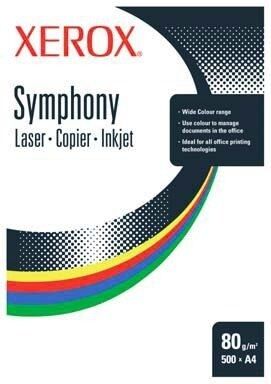
Xerox Symphony 160 A4, Green Card PW printing paperXerox Symphony 160 A4, Green Card PW. Media weight: 160 g/m², Product colour: Green, Printing media thickness: 200 ± 5 µm. Media sheets per package: 250 sheets, Paper dimensions: A4, Bleach type: ECF28,49 £*Shipping: 0,00 £Secure redirect to the provider
-
Scotch Heavy Duty Paper Packaging Tape 1.88in x 24.9yd - 1 RollScotch Heavy Duty Paper Packing Tape is a recycle-ready packaging tape with an extreme grip to ensure boxes stay securely sealed. Designed with durable solvent-free adhesive this moving tape creates a strong seal that secures up to 80 pounds of weight per box and is guaranteed to stay sealed (1). Its kraft paper finish provides a writable surface allowing you to easily label box contents add custom tags or write messages directly on the tape making it ideal for moving organizing and creative projects. This paper shipping tape can be left on the box and tossed in your curbside recycle bin for easy recycling. Whether you re shipping heavy items moving across the country or packing away seasonal decorations count on this adhesive tape to keep your boxes sealed with just one strip on each seam. Scotch Heavy Duty Paper Packing Tape is tear-by-hand for hassle-free application-no dispenser needed. One package contains one roll of box tape that is 1.88 in. x 24.9 yd. with a 3-in. core. (1) If your box doe16,49 £*Shipping: 0,00 £Secure redirect to the provider



-
What are circle ratios?
Circle ratios, also known as trigonometric ratios, are mathematical relationships between the sides and angles of a right-angled triangle. The three main circle ratios are sine, cosine, and tangent, which are defined as the ratio of the lengths of the sides of the triangle. These ratios are used to solve for unknown side lengths or angles in a right-angled triangle and are fundamental concepts in trigonometry. The sine ratio is the ratio of the length of the side opposite an angle to the length of the hypotenuse, the cosine ratio is the ratio of the length of the side adjacent to an angle to the length of the hypotenuse, and the tangent ratio is the ratio of the length of the side opposite an angle to the length of the side adjacent to the angle. **
-
What are ratios and proportions?
Ratios are a way of comparing two quantities by division, often written as a fraction or with a colon. Proportions are equations that show that two ratios are equal. In other words, proportions are two equal ratios. Ratios and proportions are used in various real-life situations, such as cooking, finance, and geometry, to compare and scale quantities. **
-
What are ratios in chemistry?
Ratios in chemistry refer to the quantitative relationship between the amounts of substances involved in a chemical reaction or process. These ratios can be expressed in various ways, such as mole ratios, mass ratios, or volume ratios. Ratios are important in stoichiometry, which is the calculation of the quantities of reactants and products in chemical reactions. By understanding and using ratios in chemistry, scientists can accurately predict and control the outcomes of chemical reactions. **
-
How do you calculate profitability ratios?
Profitability ratios are calculated by comparing a company's profits to its revenue, assets, equity, or other financial metrics. The most common profitability ratios include gross profit margin, operating profit margin, net profit margin, return on assets, and return on equity. These ratios are calculated by dividing the relevant profit figure by the corresponding financial metric. For example, the net profit margin is calculated by dividing net income by revenue and multiplying by 100 to get a percentage. These ratios help investors and analysts assess a company's ability to generate profits relative to its financial resources. **


How do I determine base ratios?
To determine base ratios, you need to first identify the different components or elements that make up the base. Then, you need to calculate the ratio of each component to the total base. For example, if the base is made up of three components A, B, and C, you would calculate the ratio of A to the total base, the ratio of B to the total base, and the ratio of C to the total base. This will give you the base ratios for each component. These ratios can be used to analyze the composition and distribution of the base components. **
What are similarity ratios involving angles?
Similarity ratios involving angles are ratios that compare the measures of corresponding angles in similar figures. In similar figures, corresponding angles are congruent, meaning they have the same measure. Therefore, the similarity ratio involving angles is always 1:1, indicating that the corresponding angles in similar figures are equal. This property is a key concept in understanding and solving problems involving similar figures and their angles. **
Top-Angebote
Products related to Ratios:
-
Xerox Premier White Paper, A4 100gsm printing paperFeatures:- Bleach Type: ECF. - Archival Life: ISO 9706 Permanent Paper. - Conforms to ISO9706.- Laser Star Rating: 5 - Copier Star Rating: 5 - Inkjet Star Rating: 4 - Offset Star Rating: 4 - Grain Direction: LONG.25,49 £*Shipping: 0,00 £Secure redirect to the provider
-
Xerox Premier 80gsm Printing Paper 500 Sheets White - A3Xerox Premier 80gsm white multipurpose paper, ream of 500 sheets, A3 (297 x 420 mm). Suitable for laser and inkjet printers, copiers and fax machines. Grammage 80 g/m², whiteness 165 CIE, opacity 91%, ECF bleached, ISO 9706 permanent (archival) paper. Manufacturer part number 003R91721.31,49 £*Shipping: 0,00 £Secure redirect to the provider
-
Xerox Premier 80gsm Printing Paper 500 Sheets White - A5Xerox Premier 80gsm white multipurpose paper, ream of 500 sheets, A5 (148 x 210 mm). Suitable for laser and inkjet printers, copiers and fax machines. Grammage 80 g/m², whiteness 165 CIE, opacity 91%, ECF bleached, ISO 9706 permanent (archival) paper. Manufacturer part number 003R91832.16,49 £*Shipping: 0,00 £Secure redirect to the provider
-
Xerox Symphony 160 A4, Green Card PW printing paperXerox Symphony 160 A4, Green Card PW. Media weight: 160 g/m², Product colour: Green, Printing media thickness: 200 ± 5 µm. Media sheets per package: 250 sheets, Paper dimensions: A4, Bleach type: ECF28,49 £*Shipping: 0,00 £Secure redirect to the provider
-
What are similarity ratios?
Similarity ratios are ratios that compare the corresponding sides of two similar figures. They help us understand the relationship between the sides of similar shapes. The ratio of corresponding sides in similar figures is always the same, which means that if you know the ratio of one pair of sides, you can use it to find the ratio of other pairs of sides. Similarity ratios are important in geometry and are used to solve problems involving similar figures. **
-
What are angle ratios?
Angle ratios are the ratios of the lengths of the sides of a right-angled triangle. In a right-angled triangle, the ratio of the length of the side opposite an angle to the length of the hypotenuse is called the sine of the angle. The ratio of the length of the side adjacent to an angle to the length of the hypotenuse is called the cosine of the angle. And the ratio of the length of the side opposite an angle to the length of the side adjacent to the angle is called the tangent of the angle. These ratios are fundamental in trigonometry and are used to solve for unknown sides and angles in right-angled triangles. **
-
What are circle ratios?
Circle ratios, also known as trigonometric ratios, are mathematical relationships between the sides and angles of a right-angled triangle. The three main circle ratios are sine, cosine, and tangent, which are defined as the ratio of the lengths of the sides of the triangle. These ratios are used to solve for unknown side lengths or angles in a right-angled triangle and are fundamental concepts in trigonometry. The sine ratio is the ratio of the length of the side opposite an angle to the length of the hypotenuse, the cosine ratio is the ratio of the length of the side adjacent to an angle to the length of the hypotenuse, and the tangent ratio is the ratio of the length of the side opposite an angle to the length of the side adjacent to the angle. **
-
What are ratios and proportions?
Ratios are a way of comparing two quantities by division, often written as a fraction or with a colon. Proportions are equations that show that two ratios are equal. In other words, proportions are two equal ratios. Ratios and proportions are used in various real-life situations, such as cooking, finance, and geometry, to compare and scale quantities. **
Similar search terms for Ratios
-
Scotch Heavy Duty Paper Packaging Tape 1.88in x 24.9yd - 1 RollScotch Heavy Duty Paper Packing Tape is a recycle-ready packaging tape with an extreme grip to ensure boxes stay securely sealed. Designed with durable solvent-free adhesive this moving tape creates a strong seal that secures up to 80 pounds of weight per box and is guaranteed to stay sealed (1). Its kraft paper finish provides a writable surface allowing you to easily label box contents add custom tags or write messages directly on the tape making it ideal for moving organizing and creative projects. This paper shipping tape can be left on the box and tossed in your curbside recycle bin for easy recycling. Whether you re shipping heavy items moving across the country or packing away seasonal decorations count on this adhesive tape to keep your boxes sealed with just one strip on each seam. Scotch Heavy Duty Paper Packing Tape is tear-by-hand for hassle-free application-no dispenser needed. One package contains one roll of box tape that is 1.88 in. x 24.9 yd. with a 3-in. core. (1) If your box doe16,49 £*Shipping: 0,00 £Secure redirect to the provider
-
Xerox Symphony 80 g/m² A4 250 Sheets Ivory printing paperXerox Symphony 80 g/m² A4 250 Sheets Ivory. Media weight: 80 g/m², Product colour: Ivory, Printing media thickness: 104 ± 2 µm. Media sheets per package: 500 sheets, Paper dimensions: A4, Bleach type: ECF28,49 £*Shipping: 0,00 £Secure redirect to the provider
-
What are ratios in chemistry?
Ratios in chemistry refer to the quantitative relationship between the amounts of substances involved in a chemical reaction or process. These ratios can be expressed in various ways, such as mole ratios, mass ratios, or volume ratios. Ratios are important in stoichiometry, which is the calculation of the quantities of reactants and products in chemical reactions. By understanding and using ratios in chemistry, scientists can accurately predict and control the outcomes of chemical reactions. **
-
How do you calculate profitability ratios?
Profitability ratios are calculated by comparing a company's profits to its revenue, assets, equity, or other financial metrics. The most common profitability ratios include gross profit margin, operating profit margin, net profit margin, return on assets, and return on equity. These ratios are calculated by dividing the relevant profit figure by the corresponding financial metric. For example, the net profit margin is calculated by dividing net income by revenue and multiplying by 100 to get a percentage. These ratios help investors and analysts assess a company's ability to generate profits relative to its financial resources. **
-
How do I determine base ratios?
To determine base ratios, you need to first identify the different components or elements that make up the base. Then, you need to calculate the ratio of each component to the total base. For example, if the base is made up of three components A, B, and C, you would calculate the ratio of A to the total base, the ratio of B to the total base, and the ratio of C to the total base. This will give you the base ratios for each component. These ratios can be used to analyze the composition and distribution of the base components. **
-
What are similarity ratios involving angles?
Similarity ratios involving angles are ratios that compare the measures of corresponding angles in similar figures. In similar figures, corresponding angles are congruent, meaning they have the same measure. Therefore, the similarity ratio involving angles is always 1:1, indicating that the corresponding angles in similar figures are equal. This property is a key concept in understanding and solving problems involving similar figures and their angles. **
* All prices are inclusive of VAT and, if applicable, plus shipping costs. The offer information is based on the details provided by the respective shop and is updated through automated processes. Real-time updates do not occur, so deviations can occur in individual cases. ** Note: Parts of this content were created by AI.