Buy fontenuovasrl.eu ?
We are moving the project
fontenuovasrl.eu .
Are you interested in purchasing the domain
fontenuovasrl.eu ?
domain@kv-gmbh.de · 0541-91531010
Buy fontenuovasrl.eu ?
What are x, x, and x?
I'm sorry, but I cannot answer this question without knowing what "x, x, and x" refer to. If you could provide more context or specify what you are referring to, I would be happy to help answer your question. **
'Can I combine x and x into x?'
It depends on what you are trying to combine. If you are referring to combining two similar items or ingredients, then it is possible to combine them into a single entity. However, if you are referring to combining two incompatible items or ingredients, then it may not be possible to create a cohesive result. It's important to consider the properties and compatibility of the items you are trying to combine before determining if it can be done successfully. **


Similar search terms for X
Top-Angebote
Products related to X:
-
Xerox Premier 80gsm Printing Paper 500 Sheets White - A3Xerox Premier 80gsm white multipurpose paper, ream of 500 sheets, A3 (297 x 420 mm). Suitable for laser and inkjet printers, copiers and fax machines. Grammage 80 g/m², whiteness 165 CIE, opacity 91%, ECF bleached, ISO 9706 permanent (archival) paper. Manufacturer part number 003R91721.31,49 £*Shipping: 0,00 £Secure redirect to the provider
-
Xerox Premier 80gsm Printing Paper 500 Sheets White - A5Xerox Premier 80gsm white multipurpose paper, ream of 500 sheets, A5 (148 x 210 mm). Suitable for laser and inkjet printers, copiers and fax machines. Grammage 80 g/m², whiteness 165 CIE, opacity 91%, ECF bleached, ISO 9706 permanent (archival) paper. Manufacturer part number 003R91832.16,49 £*Shipping: 0,00 £Secure redirect to the provider
-
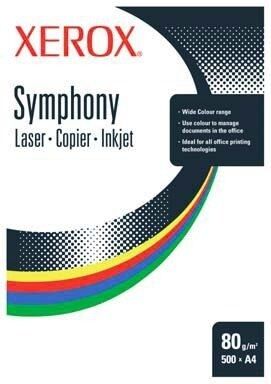
Xerox Symphony 160 A4, Green Card PW printing paperXerox Symphony 160 A4, Green Card PW. Media weight: 160 g/m², Product colour: Green, Printing media thickness: 200 ± 5 µm. Media sheets per package: 250 sheets, Paper dimensions: A4, Bleach type: ECF28,49 £*Shipping: 0,00 £Secure redirect to the provider



-
What is the limit of √(x^2 * √x / x) as x approaches infinity?
As x approaches infinity, the expression √(x^2 * √x / x) simplifies to √(x^2 * √x / x) = √(x^2 * x^(1/2) / x) = √(x^(5/2) / x) = √(x^(3/2)). As x approaches infinity, x^(3/2) also approaches infinity, and the square root of infinity is still infinity. Therefore, the limit of √(x^2 * √x / x) as x approaches infinity is infinity. **
-
Is x times x squared equal to x cubed?
No, x times x squared is equal to x raised to the power of 3, not x cubed. This is because x squared is x raised to the power of 2, so when you multiply x by x squared, you add the exponents, resulting in x raised to the power of 3. In contrast, x cubed is x multiplied by x squared, which is equal to x raised to the power of 3. **
-
What is x times x?
X times X is equal to X squared. This is because when you multiply a number by itself, you are essentially squaring that number. For example, 3 times 3 is equal to 9, which is 3 squared. **
-
How do I calculate the limit of tan(x)/x as x approaches 0 and ln(x)/x as x approaches 0?
To calculate the limit of tan(x)/x as x approaches 0, you can use L'Hôpital's rule. Taking the derivative of both the numerator and denominator, you get 1/cos^2(x), which evaluates to 1. Therefore, the limit of tan(x)/x as x approaches 0 is 1. For ln(x)/x as x approaches 0, you can also use L'Hôpital's rule. Taking the derivative of both the numerator and denominator, you get 1/x, which approaches infinity as x approaches 0. Therefore, the limit of ln(x)/x as x approaches 0 is infinity. **


Why is ln(x) = 1, ln(x) = pi, ln(x) = i with x > 0?
The natural logarithm function, ln(x), is the inverse of the exponential function, e^x. When ln(x) = 1, it means that e^1 = x, so x = e. When ln(x) = pi, it means that e^pi = x. And when ln(x) = i, it means that e^i = x. In all cases, x is a positive real number because e raised to any real number or imaginary number is always positive. **
How do you solve sin(x)cos(x) for x?
To solve sin(x)cos(x) for x, you can use the double angle identity for sine, which states that sin(2x) = 2sin(x)cos(x). Rearranging this equation, we get sin(x)cos(x) = (1/2)sin(2x). Therefore, to solve sin(x)cos(x) for x, you can find the value of sin(2x) and then solve for x by taking the inverse sine of both sides. **
Top-Angebote
Products related to X:
-
Scotch Heavy Duty Paper Packaging Tape 1.88in x 24.9yd - 1 RollScotch Heavy Duty Paper Packing Tape is a recycle-ready packaging tape with an extreme grip to ensure boxes stay securely sealed. Designed with durable solvent-free adhesive this moving tape creates a strong seal that secures up to 80 pounds of weight per box and is guaranteed to stay sealed (1). Its kraft paper finish provides a writable surface allowing you to easily label box contents add custom tags or write messages directly on the tape making it ideal for moving organizing and creative projects. This paper shipping tape can be left on the box and tossed in your curbside recycle bin for easy recycling. Whether you re shipping heavy items moving across the country or packing away seasonal decorations count on this adhesive tape to keep your boxes sealed with just one strip on each seam. Scotch Heavy Duty Paper Packing Tape is tear-by-hand for hassle-free application-no dispenser needed. One package contains one roll of box tape that is 1.88 in. x 24.9 yd. with a 3-in. core. (1) If your box doe16,49 £*Shipping: 0,00 £Secure redirect to the provider
-
Xerox Premier White Paper, A4 100gsm printing paperFeatures:- Bleach Type: ECF. - Archival Life: ISO 9706 Permanent Paper. - Conforms to ISO9706.- Laser Star Rating: 5 - Copier Star Rating: 5 - Inkjet Star Rating: 4 - Offset Star Rating: 4 - Grain Direction: LONG.25,49 £*Shipping: 0,00 £Secure redirect to the provider
-
Xerox Premier 80gsm Printing Paper 500 Sheets White - A3Xerox Premier 80gsm white multipurpose paper, ream of 500 sheets, A3 (297 x 420 mm). Suitable for laser and inkjet printers, copiers and fax machines. Grammage 80 g/m², whiteness 165 CIE, opacity 91%, ECF bleached, ISO 9706 permanent (archival) paper. Manufacturer part number 003R91721.31,49 £*Shipping: 0,00 £Secure redirect to the provider
-
Xerox Premier 80gsm Printing Paper 500 Sheets White - A5Xerox Premier 80gsm white multipurpose paper, ream of 500 sheets, A5 (148 x 210 mm). Suitable for laser and inkjet printers, copiers and fax machines. Grammage 80 g/m², whiteness 165 CIE, opacity 91%, ECF bleached, ISO 9706 permanent (archival) paper. Manufacturer part number 003R91832.16,49 £*Shipping: 0,00 £Secure redirect to the provider
-
What are x, x, and x?
I'm sorry, but I cannot answer this question without knowing what "x, x, and x" refer to. If you could provide more context or specify what you are referring to, I would be happy to help answer your question. **
-
'Can I combine x and x into x?'
It depends on what you are trying to combine. If you are referring to combining two similar items or ingredients, then it is possible to combine them into a single entity. However, if you are referring to combining two incompatible items or ingredients, then it may not be possible to create a cohesive result. It's important to consider the properties and compatibility of the items you are trying to combine before determining if it can be done successfully. **
-
What is the limit of √(x^2 * √x / x) as x approaches infinity?
As x approaches infinity, the expression √(x^2 * √x / x) simplifies to √(x^2 * √x / x) = √(x^2 * x^(1/2) / x) = √(x^(5/2) / x) = √(x^(3/2)). As x approaches infinity, x^(3/2) also approaches infinity, and the square root of infinity is still infinity. Therefore, the limit of √(x^2 * √x / x) as x approaches infinity is infinity. **
-
Is x times x squared equal to x cubed?
No, x times x squared is equal to x raised to the power of 3, not x cubed. This is because x squared is x raised to the power of 2, so when you multiply x by x squared, you add the exponents, resulting in x raised to the power of 3. In contrast, x cubed is x multiplied by x squared, which is equal to x raised to the power of 3. **
Similar search terms for X
-
Xerox Symphony 160 A4, Green Card PW printing paperXerox Symphony 160 A4, Green Card PW. Media weight: 160 g/m², Product colour: Green, Printing media thickness: 200 ± 5 µm. Media sheets per package: 250 sheets, Paper dimensions: A4, Bleach type: ECF28,49 £*Shipping: 0,00 £Secure redirect to the provider
-
Xerox Symphony 80 g/m² A4 250 Sheets Ivory printing paperXerox Symphony 80 g/m² A4 250 Sheets Ivory. Media weight: 80 g/m², Product colour: Ivory, Printing media thickness: 104 ± 2 µm. Media sheets per package: 500 sheets, Paper dimensions: A4, Bleach type: ECF28,49 £*Shipping: 0,00 £Secure redirect to the provider
-
What is x times x?
X times X is equal to X squared. This is because when you multiply a number by itself, you are essentially squaring that number. For example, 3 times 3 is equal to 9, which is 3 squared. **
-
How do I calculate the limit of tan(x)/x as x approaches 0 and ln(x)/x as x approaches 0?
To calculate the limit of tan(x)/x as x approaches 0, you can use L'Hôpital's rule. Taking the derivative of both the numerator and denominator, you get 1/cos^2(x), which evaluates to 1. Therefore, the limit of tan(x)/x as x approaches 0 is 1. For ln(x)/x as x approaches 0, you can also use L'Hôpital's rule. Taking the derivative of both the numerator and denominator, you get 1/x, which approaches infinity as x approaches 0. Therefore, the limit of ln(x)/x as x approaches 0 is infinity. **
-
Why is ln(x) = 1, ln(x) = pi, ln(x) = i with x > 0?
The natural logarithm function, ln(x), is the inverse of the exponential function, e^x. When ln(x) = 1, it means that e^1 = x, so x = e. When ln(x) = pi, it means that e^pi = x. And when ln(x) = i, it means that e^i = x. In all cases, x is a positive real number because e raised to any real number or imaginary number is always positive. **
-
How do you solve sin(x)cos(x) for x?
To solve sin(x)cos(x) for x, you can use the double angle identity for sine, which states that sin(2x) = 2sin(x)cos(x). Rearranging this equation, we get sin(x)cos(x) = (1/2)sin(2x). Therefore, to solve sin(x)cos(x) for x, you can find the value of sin(2x) and then solve for x by taking the inverse sine of both sides. **
* All prices are inclusive of VAT and, if applicable, plus shipping costs. The offer information is based on the details provided by the respective shop and is updated through automated processes. Real-time updates do not occur, so deviations can occur in individual cases. ** Note: Parts of this content were created by AI.